
As energy prices fluctuate and the cost of living continues to climb, the American household finds itself at a crossroads between necessary expenditures and discretionary survival. Christopher Hailstone, a seasoned expert in utilities and grid reliability, brings a wealth of knowledge regarding the intricate relationship between energy supply chains and the daily financial realities of the middle class. In this discussion, we explore the cascading effects of rising fuel costs on family budgets, the logistical challenges faced by service-oriented small businesses, and the psychological thresholds that dictate when a driver decides to park their car for good. We also delve into the specific strategies used by commuters to bypass toll-filled highways and the shifting mindsets of younger generations who are reevaluating their relationship with leisure travel and consumption.
When fuel costs nearly double, such as seeing a full tank jump from $20 to $40, what specific spending categories do families typically cut first? How do these immediate trade-offs affect long-term financial stability for middle-class households?
When the price of filling a tank climbs from a manageable $20 to a staggering $40, the impact is felt almost instantly in the domestic kitchen and the local social scene. We are seeing families like those in Queens who have transitioned from dining out to strictly cooking at home because the math simply doesn’t add up otherwise. This shift hits the “fun” part of the budget first—discretionary spending on movies, weekend outings with friends, and even youth sports travel are the primary casualties. For a middle-class household, the long-term danger lies in the erosion of their safety net; when you are forced to “absorb the cost somewhere,” as many drivers now say, that money is often diverted from savings or emergency funds. Over time, these small, repetitive subtractions from a family’s disposable income can lead to a precarious financial position where one major medical bill or home repair becomes a catastrophe because the “gas tax” has already drained their liquidity.
Many drivers find public transit impractical for late-night shifts or multi-borough commutes between job sites. In these scenarios, what alternative strategies can commuters use to lower fuel consumption, and how should they weigh the personal safety risks of transit against the rising cost of driving?
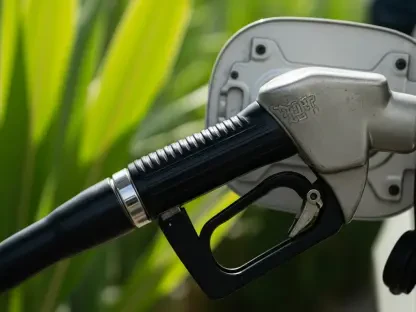
For those working late-night shifts or navigating complex routes between Brooklyn and Long Island, the subway or bus often feels like a non-starter due to both time constraints and safety concerns. Commuters are increasingly adopting “strategic refueling” habits, such as putting in only $10 or enough gas to get them to a cheaper station rather than filling up at high-priced pumps that might charge $4.19 or more for credit. There is a palpable hesitation to rely on public transportation when work ends late, as the perceived risk to personal safety often outweighs the $4-per-gallon pain at the pump. Instead of switching modes of transport, these workers are forced to be more calculated with their vehicle use, often choosing to stay in their cars for the sense of security while looking for every possible way to shave cents off the price per gallon. This creates a difficult emotional burden where the driver feels “stuck” with an expensive necessity that they cannot safely or efficiently replace.
Service industries, like construction and painting, face shrinking profit margins when gas hits $7 a gallon in major cities. How can small business owners restructure their daily project schedules to minimize travel, and what steps should they take to communicate these logistical changes to their clients?
In high-cost hubs like Los Angeles, where Shell stations have seen prices spike to $6.99 or even $7.19 for credit, the traditional model of service delivery is being completely overhauled. Contractors are now under strict directives to complete work in a single visit, avoiding the “return trip” at all costs because those extra miles are quite literally evaporating their profit margins. Business owners are becoming much more transparent with their clients, explaining that logistical efficiency is the only way to keep project quotes stable without adding a massive “fuel surcharge” to the bill. By communicating that a streamlined schedule—finishing flooring, painting, and drywall in one focused push—benefits the client’s timeline as much as the contractor’s bottom line, they manage to maintain professional trust. This shift toward “single-visit completion” is becoming a survival tactic for independent brokers and tradespeople who simply cannot afford to waste a drop of fuel on poor planning.
Data suggests that roughly 60% of drivers alter their behavior at the $4 mark, a figure that jumps significantly at $5. What specific lifestyle adjustments, such as choosing back roads over tollways or combining errands, provide the most relief, and at what point does “driving less” become an economic impossibility?
The $4 threshold is a massive psychological and economic barrier, with about 59% of Americans reporting they change their habits at that level, a figure that surges to 75% once gas hits $5. We are seeing a fascinating “scenic route” movement, where drivers in states like Delaware are abandoning the convenience of freeways to take back roads, purely to avoid paying tolls that eat into their remaining cash. This lifestyle adjustment turns a three-trip afternoon into a single, highly-coordinated errand run, as people realize that every turn of the key costs more than it did a month ago. However, for the worker who must shuttle children between school and daycare or the attorney commuting from Bethesda to D.C., “driving less” eventually hits a wall of economic impossibility. When your livelihood and your family’s basic needs depend on being in a specific place at a specific time, you eventually reach a point where you must simply pay the “ridiculous prices” and hope for a market correction.
Younger drivers are increasingly questioning their discretionary spending and daily driving patterns due to high fuel costs. How does this shift in mindset impact local economies that rely on leisure travel, and what financial literacy tools can help new workers manage volatile expenses that are largely outside of their control?
The younger generation, particularly those just entering the workforce or graduating high school, is experiencing a sharp awakening to the volatility of global markets, leading them to ask, “Do I really need this?” before every outing. This mindset shift is a quiet threat to local economies that depend on “aimless” driving, spontaneous shopping trips, and regional leisure travel, as young people start to view their cars as utility tools rather than symbols of freedom. To manage this, new workers should embrace “gas-specific” budgeting, perhaps using apps or fuel reward programs like those found at Kroger or Royal Farms to secure a $3.89 rate when the street price is much higher. Financial literacy in this era means understanding that while you cannot control the war in Iran or global supply disruptions, you can control your “burn rate” by prioritizing essential commutes over discretionary social trips. By learning to “watch where they go” early in their careers, these drivers are developing a disciplined approach to spending that may last long after prices eventually stabilize.
What is your forecast for gas prices and their long-term impact on American consumer behavior?
Given the current geopolitical tensions and the risk of supply disruptions pushing oil prices higher, my forecast is that we will see a prolonged period of elevated costs that will permanently bake “trip-combining” into the American psyche. Even if prices dip back below the $4 mark, the memory of $7-per-gallon “crazy” prices in Los Angeles and $4.14 national averages will leave drivers feeling more cautious and less likely to return to previous levels of wasteful discretionary driving. We are entering an era of “fuel-conscious living” where the efficiency of a commute or the proximity of a job to home will become as important as the salary itself. Ultimately, this will likely lead to a faster adoption of fuel-efficient habits and a more critical eye toward any expenditure that doesn’t offer a direct return on the cost of the journey. For the average American, the car is no longer just a means of transport; it is a high-cost asset that requires a strategic plan for every mile driven.