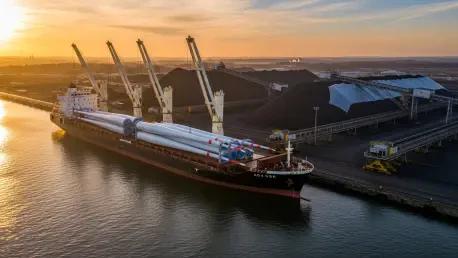

The worldwide engine of coal production, long a symbol of industrial might and energy generation, is forecast to slow to a near standstill by 2026, with projected annual growth of just 0.2% pushing total output to 9,355.8 million tonnes. This dramatic deceleration is not merely a cyclical dip in a volatile market but rather represents a significant structural shift for the entire industry. A powerful confluence of factors, including persistent oversupply across key markets, sustained price weakness throughout the value chain, and sluggish growth in electricity demand, is systematically eroding the incentives for large-scale production expansion. Compounding these market pressures is the accelerating build-out of renewable energy generation capacity, which is increasingly displacing coal in the global energy mix. Together, these forces are creating a fundamentally new and challenging environment, signaling a long-term recalibration of coal’s role in the world’s energy future.
Challenges in Major Producing Nations
China’s Shifting Energy Landscape
As the world’s undisputed leader in coal production and consumption, China is poised to experience a pivotal shift, with its output expected to decline by 0.8% in 2026, marking the first such decrease in a decade. This downturn is not rooted in a single cause but rather in a complex interplay of internal market dynamics. A significant factor is the condition of excess domestic supply, which has been exacerbated by stagnant demand from critical downstream industries like steel and cement manufacturing. This glut has led to elevated inventory levels at both power plants and major shipping ports, creating a backlog that suppresses prices and removes any urgency for producers to increase output. While coal continues to play a strategic role in bolstering China’s energy security, particularly as a reliable baseload power source, its dominance is being steadily challenged. The government’s dual objectives of ensuring energy independence while also pursuing ambitious decarbonization goals have created a landscape where the path of least resistance is no longer relentless expansion of coal mining.
The primary force reshaping China’s energy consumption patterns and, by extension, its coal production, is the nation’s massive and sustained investment in renewable energy. The relentless expansion of solar, wind, and hydropower capacity is beginning to fundamentally alter the country’s power grid, reducing the overall coal burn required to meet electricity demand. This transition is set to diminish coal’s share in the total energy mix, recasting its role from the primary engine of growth to that of a stabilizing, supplementary fuel source. The scale of this green energy deployment is now so substantial that it is capable of offsetting incremental growth in energy demand, directly leading to a projected decline in overall coal consumption. This trend illustrates that even in a nation where energy security is paramount, the economic and environmental advantages of renewables are powerful enough to trigger a structural decline in the incumbent fossil fuel, a clear signal of the changing tides in global energy markets.
Western Transition and Asian Market Pressures
In the United States, the outlook for coal production is even more stark, with output forecast to contract sharply by an estimated 5.1% in 2026. This decline reflects an accelerating and structural transition away from coal-fired power generation across the country’s utility sector. The trend is underpinned by powerful economic drivers, most notably the continued cost-competitiveness of both natural gas and renewable energy sources. With abundant and affordable natural gas supplies and the rapidly falling costs of wind and solar installations, coal is increasingly being pushed out of the power mix on pure economic grounds. This shift is solidified by the ongoing, structural retirement of aging coal plants, which are often more expensive to maintain and operate than building new, more efficient gas or renewable facilities. Coal’s share in the national power generation portfolio already fell below the 20% threshold in 2024, and this downward trajectory is expected to continue, cementing a long-term move away from the fuel that once powered the nation’s industrial rise.
Meanwhile, in Asia, major coal exporter Indonesia is facing its own set of headwinds, with its production projected to fall by 3.9%. This decline is largely a consequence of external market forces, including softer demand from key export destinations and persistently weak international prices that are squeezing producer margins. A significant oversupply in crucial Asian markets, particularly China and India, has created a buyer’s market, limiting Indonesia’s ability to maintain its export volumes at profitable levels. While a growing domestic demand for coal provides some support for Indonesian producers, it is insufficient to fully offset the sharp reduction in overseas sales. This situation highlights the vulnerability of export-dependent economies to shifts in global commodity flows. The combination of high inventory levels across the region and thinning profit margins is creating a challenging environment, compelling Indonesian miners to scale back production in response to the changing market realities.
A Confluence of Factors Reshaping an Industry
The global coal market in 2026 was ultimately defined by a severely constrained production environment, marking a significant departure from previous decades of robust growth. The near-stagnation of the industry was not the result of any single event but rather the culmination of distinct but interconnected pressures converging from multiple directions. In the West, particularly in the United States, a deep and structural energy transition driven by the economic superiority of natural gas and renewables decisively curtailed coal demand. In parallel, market-specific issues in Asia, led by an oversupply within China, created a ripple effect that suppressed international prices and dampened export volumes for major producers like Indonesia. These powerful dynamics, acting in concert, effectively suppressed both demand and prices on a global scale. This convergence of forces signaled a more challenging and uncertain long-term outlook for an industry facing a fundamentally altered energy landscape.