
The landscape of global energy ownership has undergone a seismic transformation as private family capital quietly replaces the institutional giants that once dictated the market. For decades, the flow of capital into fossil fuels was governed by massive pension funds and public private equity firms, but a fundamental shift in sentiment has created a trillion-dollar vacuum. As these traditional entities distance themselves from carbon-intensive assets, ultra-high-net-worth families have stepped into the fray, transforming from passive observers into the primary architects of the modern energy sector.
This migration of influence is not merely a change of names on a ledger; it represents a profound realignment of how energy resources are valued and managed. While Wall Street remains tethered to quarterly performance metrics and rigid social mandates, family offices operate with an level of autonomy that allows them to ignore public optics in favor of raw economic potential. This transition has turned the oil patch into a sanctuary for contrarian capital, where the absence of institutional competition has paved the way for unprecedented control over the world’s most critical fuel sources.
The Great Institutional Exit and the Trillion-Dollar Vacuum
The exodus of institutional capital from the oil and gas sector was fueled by a combination of regulatory pressure and a massive pivot toward sustainability-focused investing. As major endowments and public funds adopted strict divestment policies, the supply of traditional financing for exploration and production dried up almost overnight. This sudden withdrawal created a massive liquidity gap, leaving high-quality energy assets stranded and desperate for new sources of funding.
Consequently, the energy market transformed into a buyer’s paradise for those with the liquid reserves to take a stand against the prevailing trend. Family offices, unencumbered by the same fiduciary constraints as public pension managers, recognized that while the world is transitioning toward renewables, the current global economy still runs on hydrocarbons. By moving into this space, private wealth firms have managed to secure dominant positions in mature basins, effectively capturing the market share abandoned by the previous generation of financial titans.
The ESG Catalyst and the Return to Fundamentals
The emergence of family offices as energy titans is deeply rooted in a structural divergence within global finance. While Environmental, Social, and Governance (ESG) mandates forced traditional funds to prioritize social signaling, family offices remained focused on the fundamental valuation of assets. This created a significant valuation gap where oil and gas assets were trading at just two to three times cash flow, a level of affordability that would have been unthinkable a decade ago.
The freedom of private capital to act in a contrarian manner serves as a massive competitive advantage. When traditional markets are constrained by mandates that restrict fossil fuel exposure, family offices can deploy capital with surgical precision. They have shifted the narrative from speculative commodity trading to the acquisition of real assets, treating oil production more like a stabilized real estate portfolio than a volatile gamble. This pragmatic approach has allowed them to ignore the noise of public discourse and focus on the reliable generation of wealth.
Strategic Windfalls and the Geopolitical Landscape
Recent global events have vindicated those who maintained their conviction in traditional energy, turning bold bets into historic financial gains. As regional instability and supply constraints pushed crude prices toward significant peaks, the families that “doubled down” during previous market dips found themselves sitting on immense profits. These windfalls were not the result of luck but were the product of a calculated strategy to accumulate high-quality production assets at a steep discount.
In the Permian Basin, this strategy has evolved into a highly industrial process. By utilizing advanced predictive technology, family-run firms have transformed oil extraction into a repeatable cash-flow engine that functions with the efficiency of a modern factory. This technological edge, combined with a willingness to hold assets through geopolitical volatility, has allowed private wealth to capture the upside of price spikes while maintaining a lower cost basis than their predecessors.
Structural Edge: Why Private Wealth Outlasts Private Equity
The enduring success of family offices in this sector is primarily a result of their unique organizational structure. Unlike private equity funds, which are typically restricted by a five-to-ten-year lifecycle, family offices operate with generational time horizons. This “infinite” hold period allows them to ignore short-term price fluctuations that would force a public fund to liquidate its position or satisfy anxious limited partners.
Moreover, energy assets serve as a natural shield against the eroding purchasing power of traditional currencies and bonds. As inflation remains a persistent concern for the global economy, “new money” from sectors like technology and options trading is increasingly rotating into the energy sector to find uncorrelated returns. This influx of diverse private capital ensures that the oil and gas industry remains well-funded and resilient, even as traditional banking relationships become more complex and restrictive.
Navigating the High-Price Environment: Strategies for Modern Energy Investors
While current price levels offer record-breaking profits for those already in the market, they create a challenging environment for newcomers attempting to build a portfolio. A significant disconnect has emerged between sellers, who are eyeing peak valuations, and buyers, who are seeking long-term stability. Bridging this bid-ask spread requires sophisticated deal structures that can account for future price volatility without overpaying for current production.
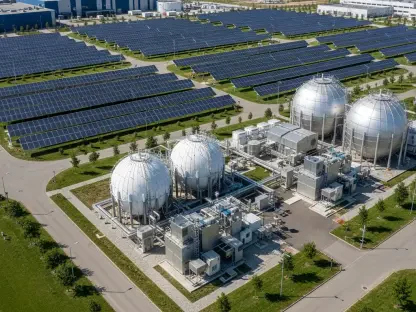
Modern energy investors are also increasingly focused on the hybrid nature of the energy transition. Many family offices are using the substantial profits generated from fossil fuels to fund long-term interests in green energy infrastructure, creating a diversified energy portfolio that hedges against future regulatory changes. This balanced approach ensures that they remain relevant regardless of how quickly the global energy mix shifts toward renewables.
The rise of the family office in the energy sector reflected a broader realignment of global financial power. By stepping into the void left by fleeing institutions, these private firms successfully secured the world’s most vital resources at a fraction of their historical cost. Their journey proved that patience and a focus on fundamentals could triumph over the shifting tides of public sentiment. Moving forward, the industry must prioritize the development of carbon-capture technologies and hybrid extraction models to ensure these assets remained viable in a tightening regulatory environment. Investors who embraced the integration of traditional production with emerging clean-tech solutions positioned themselves to lead the next era of energy independence.