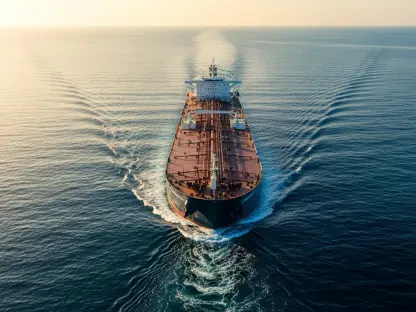

The European Union has embarked on a landmark initiative to steer its vast maritime sector away from fossil fuels, addressing the critical bottleneck of sustainable fuel availability that has long stalled decarbonization efforts. Confronting a projected need for 20 million tonnes of alternative fuels for the aviation and maritime sectors by 2035, the European Commission has unveiled its Sustainable Transport Investment Plan (STIP). This comprehensive strategy aims to untangle a complex web of investment risks, technological uncertainties, and market imbalances that currently hinder the large-scale production and adoption of sustainable maritime fuels (SMFs). The plan is not just a response to environmental pressures but a necessary step to ensure the shipping industry can navigate a trio of stringent EU regulations: the FuelEU Maritime Regulation, the Renewable Energy Directive, and the EU Emissions Trading System (ETS), which collectively demand a profound operational and technological shift.
A Financial Blueprint for Change
The STIP serves as a formal reaffirmation of the European Commission’s dedication to maritime decarbonization, bringing together a suite of targeted measures intended to catalyze investment in renewable and low-carbon fuels. This strategic plan is designed to mobilize a substantial, though preliminary, sum of at least €2.9 billion by the end of 2027. This funding is structured through several key EU financial instruments, each playing a distinct role in building a viable market. The Innovation Fund, for instance, has a direct allocation of €293 million designated specifically for maritime fuel projects, providing direct capital to promising initiatives. Furthermore, the Hydrogen Bank, operating under the Innovation Fund, features a dedicated funding window with a €300 million budget to support the production of sustainable fuels for both the aviation and waterborne transport sectors, acknowledging the overlapping needs and fostering cross-sectoral synergies in fuel development and infrastructure.
Complementing these direct funding mechanisms, the plan leverages broader investment programs to amplify its impact and draw in private capital. The EC anticipates that its InvestEU Programme will be instrumental in mobilizing approximately €2 billion in private and public investment for sustainable alternative fuels by 2027, acting as a crucial de-risking tool for larger projects. To address the technological frontier, around €133 million will be channeled through Horizon Europe, supporting vital research and innovation projects. These initiatives are essential for maturing emerging renewable fuel technologies—such as green hydrogen, ammonia, and advanced biofuels—and fortifying their associated value chains from production to bunkering. Together, these financial streams create a multi-layered support system designed to nurture the entire SMF ecosystem, from early-stage research to full-scale commercial deployment.
Navigating Systemic Industry Hurdles
Despite this significant financial commitment, the path to a sustainable maritime future is fraught with systemic challenges that money alone cannot solve. The sector’s inherent technological complexity—characterized by diverse ship types, global and varied route structures, and a wide spectrum of energy requirements—necessitates a broad portfolio of fuel options rather than a single silver-bullet solution. This diversity, encompassing everything from methanol and ammonia to hydrogen and advanced biofuels, creates a daunting scenario for project developers and investors. They must simultaneously navigate high-stakes decisions on which technology to back, what infrastructure to build, and how to manage future operational costs, all while regulatory frameworks and technical standards are still solidifying. The most significant operational hurdle is the need to build out production capacities for these new fuels in parallel with the development of essential port-side and bunkering infrastructure, a coordinated effort that has left many ambitious projects stalled as they await final investment decisions.
A central conflict slowing progress is the fundamental mismatch in contractual preferences between fuel producers and their potential customers. Producers of sustainable fuels require long-term off-take agreements, often spanning 10 to 15 years, to guarantee the revenue streams essential for securing the bankability and financing of their capital-intensive production facilities. Conversely, consumers, such as major shipping lines, prefer the flexibility and price security offered by short-term contracts of one to three years, which allow them to adapt to market volatility and evolving technologies. This impasse has created a classic market failure, where neither side is willing to make the first move, effectively blocking the flow of private capital into the sector. To resolve this standoff, the STIP proposes innovative market mechanisms, with double-sided auctions emerging as a potential breakthrough solution that could finally align the risk appetites of producers and consumers.
Forging a Supportive Regulatory and Strategic Framework
The proposed double-sided auction model introduces a market intermediary to bridge the commercial gap between fuel producers and buyers. This entity would enter into long-term contracts with producers, providing them with the necessary revenue certainty to unlock financing. Simultaneously, it would engage in a series of shorter-term contracts with fuel buyers, offering them the desired market flexibility. By assuming the financial risk of refinancing these contracts over time, the intermediary could break the investment deadlock. The ultimate success of this approach will depend heavily on the legal and financial robustness of the tripartite contracts designed to de-risk the investment for all involved parties, creating a stable and predictable market environment where both supply and demand can flourish. This mechanism represents a shift from simple subsidies to sophisticated market design aimed at creating a self-sustaining ecosystem for SMFs.
Beyond these novel financial mechanisms, the STIP is part of a broader push for regulatory streamlining and strategic support. The European Commission has pledged to incentivize the supply of SMFs to help the industry meet its demanding FuelEU Maritime targets and plans to announce further measures in the forthcoming Energy Union package. A significant administrative simplification is planned for 2026, with the proposed amalgamation of the EU MRV (Monitoring, Reporting, and Verification), EU ETS, and FuelEU regulations into a single, unified MRV framework. This consolidation aims to dramatically reduce the compliance burden for shipping companies, verifiers, and Member States, making the complex transition more manageable. This holistic approach signals that the EU is committed to creating not just a funded transition, but also a coherent and efficient one.
A Global Vision with Self-Sustaining Funds
Recognizing that shipping is an inherently global industry, the European strategy extends far beyond its own borders. The Commission is actively identifying strategic international ports with high potential for SMF production and bunkering to establish green shipping corridors and hubs through initiatives like the Global Gateway. This proactive international cooperation is crucial for ensuring that vessels operating on long-haul routes have access to sustainable fuels at key logistical points worldwide, preventing a fragmented system where clean shipping is only possible on regional European routes. The forthcoming EU Ports Strategy and EU Industrial Maritime Strategy, both expected in the second quarter of 2026, will work in tandem to support domestic ports in their transition to energy hubs and to bolster Europe’s maritime manufacturing and technological capabilities, positioning the continent as a leader in the global green maritime transition.
A crucial component of the funding equation is the direct reinvestment of revenues generated from the maritime sector’s inclusion in the EU Emissions Trading System, which took effect on January 1, 2024. This creates a circular funding model where the industry’s own carbon costs help finance its decarbonization. The European Commission has specifically earmarked 20 million ETS allowances for maritime decarbonization projects up to 2030. Depending on the fluctuating price of carbon, this allocation could translate to approximately €1.6 billion in dedicated funding. This mechanism ensures a steady and predictable stream of capital for green projects, directly linking compliance costs with the solutions needed to reduce emissions, and reinforcing the principle that polluters should contribute to the environmental transition.
A Foundational Framework for Future Action
The European Commission’s Sustainable Transport Investment Plan represented a pivotal moment in the maritime industry’s decarbonization journey. While the initial mobilization of €2.9 billion was a significant step, it constituted only a fraction of the estimated €100 billion investment required by 2035 to achieve the sector’s ambitious green targets. Consequently, the plan’s true value lay not in its immediate financial injection but in its role as a foundational framework for building a functional market from the ground up. It laid the essential groundwork by promising to reshape investment paradigms, introduce novel market mechanisms like double-sided auctions, and streamline a notoriously complex regulatory landscape. For all stakeholders, from investors and fuel producers to shipping lines and port authorities, success was ultimately determined by how swiftly these political intentions were converted into binding, bankable instruments and how effectively the regulatory framework, infrastructure planning, and capital markets were synchronized to create a seamless and efficient transition. The subsequent years became a decisive test of whether Europe could set the necessary pace to establish a sustainable maritime industry that was not only environmentally responsible but also competitive on a global scale.