
The rhythmic clicking of numbers on a gas pump has become a source of national anxiety as prices at the station steadily climb past four dollars a gallon, stirring a deep-seated economic dread. While modern political discourse frequently champions the idea of American energy independence, the global market remains a tangled web where a single explosion in the Middle East can instantly deplete a family’s grocery budget. As Brent crude surges by 27 percent and breaches the hundred-dollar threshold, the shadow of geopolitical conflict in the Persian Gulf looms over every driver in the country. The current situation suggests that despite domestic production gains, the White House is facing a volatility that no single administration can fully insulate from the American public.
The Fragile Illusion of Energy Security at the Pump
Energy is often described as the “nation-buster” of politics because it possesses the unique power to dismantle presidential legacies and erode public trust in the government’s ability to maintain basic stability. When jet fuel prices spike by nearly double and liquid natural gas costs soar, the interconnected nature of modern commodities makes the dream of domestic isolationism an impossibility. This current volatility serves as a stark reminder that the United States is still bound to the tides of global supply, regardless of how much oil is pumped from Texas or North Dakota.
The psychological impact of these rising costs extends beyond the wallet, creating a sense of vulnerability that permeates the national mood. When citizens see the price of basic transportation and heating rise due to decisions made thousands of miles away, the government’s promise of security begins to feel hollow. If the administration fails to contain these ripples, the resulting economic firestorm could become the defining challenge of the current political era, proving that energy remains the ultimate arbiter of executive success.
Why History Repeats Itself in the Strait of Hormuz
The tension between the United States and Iran represents more than a diplomatic impasse; it is a direct threat to the world’s most vital maritime artery, the Strait of Hormuz. Roughly 20 percent of the world’s petroleum passes through this narrow passage, meaning any military escalation effectively places the global economy in a chokehold. This geographic bottleneck ensures that regional skirmishes have immediate, global consequences that bypass traditional borders.
History shows that when this specific waterway is threatened, the market reacts with a speed that outpaces traditional policy responses. The Strait of Hormuz is not just a shipping lane; it is a pressure point that, when squeezed, sends shockwaves through everything from manufacturing costs to the price of a gallon of milk. Because the world remains heavily dependent on this transit point, the risk of a protracted conflict there could trigger a supply vacuum that would be nearly impossible to fill through domestic efforts alone.
Dissecting the Economic and Geopolitical Shocks
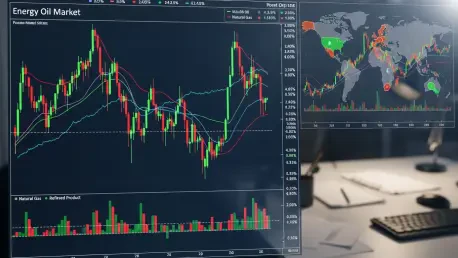
Market data already reflects the severity of the situation, with a 96 percent spike in jet fuel costs and a 43 percent rise in Asian natural gas prices signaling a broader inflationary spiral. These regional conflicts do not stay regional; they manifest as synchronized movements in global commodity markets that eventually hit American pockets. The International Energy Agency has already issued warnings that the current relief provided by emergency oil reserves is a temporary fix for a much deeper structural problem.
As emergency oil reserves are depleted at an accelerating rate to keep prices stable, the threat of a hundred-and-fifty-dollar barrel of oil becomes a realistic shadow over the economy. Such a surge would likely dwarf the record highs seen in 2008, potentially crushing consumer spending and stalling industrial output. This vulnerability underscores the reality that even the largest economies are susceptible to the chain reactions of energy-led inflation, where high costs in one sector inevitably bleed into all others.
Lessons from the Nation-Busters of the 1970s
During the 1970s, the energy “jolts” of 1973 and 1979 fundamentally altered the relationship between the American citizenry and the state, shifting the national mood from one of shared sacrifice to deep political resentment. Historians like Meg Jacobs have noted that while scandals like Watergate proved presidents could lie, the energy crises proved that the government simply “didn’t work.” This failure to manage the most basic requirement of modern life—affordable energy—created a legacy of institutional distrust that persists to this day.
The era of Paul Volcker also serves as a grim reminder that curbing energy-led inflation often requires painful interest rate hikes that can trigger deep recessions. Unlike the 1970s, however, today’s political climate lacks the appetite for the conservation measures once championed by previous leaders, such as the 55-mph speed limit. In a modern environment where any call for restraint is framed as a sign of national weakness, the tools available to manage a supply shock have become significantly more limited and politically toxic.
Strategies for Navigating a High-Volatility Energy Market
Diversifying the energy portfolio remains the only long-term defense against geopolitical blackmail and the whims of Middle Eastern instability. While some global governments are already implementing modern conservation frameworks—such as demand-side management and reduced speed limits—the United States has largely avoided these discussions to sidestep political backlash. However, anticipating market adjustments requires a move beyond rhetoric toward tangible strategies that can buffer the economy against the “worst-case” scenario of protracted stagflation.
The accountability factor in this crisis is particularly high due to the centralization of executive power, where the “alone can fix it” mentality ensures the administration bears the full weight of any economic downturn. Navigating this high-volatility market will require a delicate balance of strategic reserve management and a shift toward more resilient, localized energy sources. Ultimately, the ability to weather this storm depended on whether the leadership recognized that a government’s primary duty was to provide the stability required for the nation to function without the constant threat of an energy-induced collapse.