
The intricate relationship between South Africa’s economic stability and its dependence on heavy industrial coal processing has reached a critical juncture where operational efficiency now dictates survival. As the operator of the world’s largest coal-to-liquids (CTL) complex, Sasol remains the central pillar of the regional energy landscape, providing a significant portion of the country’s liquid fuels and essential chemicals. However, the aging infrastructure at the Secunda facility and the varying quality of domestic feedstock have forced a strategic re-evaluation of how the company manages its primary raw material.
In this high-stakes environment, the significance of CTL technology extends beyond mere fuel production; it is a matter of national energy security. While global competitors shift toward lighter feedstocks, Sasol is doubling down on its unique ability to transform solid minerals into liquid gold. The current market dynamics, characterized by volatile energy prices and fluctuating chemical margins, have made it clear that relying on legacy extraction methods is no longer sustainable. Consequently, the industry is witnessing a pivot toward enhancing internal feedstock quality to protect industrial output from external shocks.
The Current State of the Global Coal-to-Liquids and Chemicals Industry
The global energy market is currently navigating a period of profound uncertainty, which places Sasol’s reliance on the Secunda complex under intense scrutiny. This facility does not just produce fuel; it serves as a massive industrial hub that supplies raw materials for various sectors, including agriculture and manufacturing. To maintain its competitive edge, the company is prioritizing technological shifts that allow for better management of coal quality before it even reaches the gasification stage.
Economic volatility has historically eroded Sasol’s margins, making the cost of inputs a primary concern for stakeholders. By focusing on internal resource optimization, the company is attempting to insulate itself from the price swings of the international market. This strategy involves a sophisticated understanding of gasification chemistry, where even minor improvements in the purity of the coal feedstock can lead to massive gains in downstream productivity and financial performance.
Strategic Evolution and Market Performance Projections
Emerging Trends in Coal Quality Management and Operational Efficiency
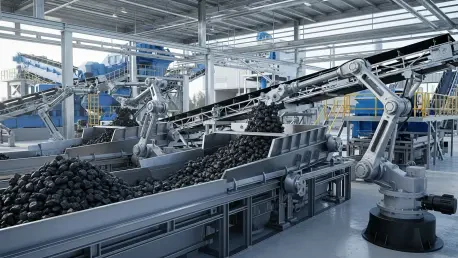
A centerpiece of this evolution is the recent commissioning of a R700-million destoning facility designed to tackle the problem of declining coal quality at its source. By implementing on-site beneficiation, Sasol can now mechanically remove rocks and inorganic impurities from its mined coal. This technological advancement in the pre-gasification phase aims to lower impurity levels to roughly 12%, a benchmark that ensures the gasifiers operate with much higher stability and less mechanical wear.
Moreover, the corporate behavior of the firm has shifted toward a philosophy of abatement within existing systems. Rather than abandoning coal in the immediate term, the strategy focuses on squeezing every possible efficiency out of current assets. This approach balances the need for high industrial output with the increasing pressure to meet environmental targets, as cleaner feedstock requires less energy to process and results in fewer operational disruptions.
Financial Outlook and Targeted Reductions in External Coal Procurement
The financial data underscores the urgency of these technical upgrades, especially following a reported 52% decline in earnings before interest and tax (EBIT). Much of this downturn was linked to the high cost of purchasing third-party coal to supplement poor-quality internal reserves. However, the outlook for the remainder of the year suggests a turning point. Management has set a clear target to reduce external coal purchases from 4.9 million tons to approximately 4 million tons in the current cycle.
Long-term performance indicators now point toward a more stabilized procurement strategy. The goal is to keep annual external intake between 4 million and 6 million tons, a move that would significantly lower the overall cost of production. By relying more on its own refined coal, the company projects a restoration of margins that have been under pressure for several years, providing a clearer path toward fiscal health.
Navigating the Obstacles of High Input Costs and Feedstock Degradation
The financial burden of external supply remains one of the most significant hurdles to profitability. Currently, the company pays roughly R700 per ton for third-party coal, a price point that is increasingly difficult to justify when internal reserves are available. This high cost is compounded by the logistics of moving millions of tons of material via diesel-powered trucks and a rail infrastructure that often suffers from bottlenecks.
To mitigate the impact of declining reserve quality, Sasol is leaning heavily on technical interventions. The degradation of coal seams is a natural consequence of decades of mining, but capital investments like the destoning plant allow the company to bypass the physical limitations of the earth. Aggressive internal cost control is no longer just a boardroom talking point; it is an operational necessity for margin restoration in an environment where inflation remains a persistent threat.
The Regulatory Landscape and Environmental Compliance Frameworks
From a regulatory standpoint, the shift toward higher-quality coal serves as a vital tool for managing carbon intensity. Better coal means a more efficient gasification process, which naturally reduces methane leakage and the total volume of raw material required to hit production targets. This is particularly relevant as global Scope 3 emission standards become more stringent, forcing companies to account for the carbon footprint of their entire supply chain, including logistics.
Furthermore, the reduction of transport-related emissions is a significant step toward compliance. By processing more coal on-site and reducing the fleet of diesel trucks on the road, the company aligns itself with international pressure for decarbonization without sacrificing domestic energy mandates. This delicate balance allows the complex to remain operational while the broader industrial sector searches for more sustainable, long-term energy solutions.
Future Pathways for Sasol and the Regional Industrial Energy Mix
Coal remains the cornerstone of regional industrial output, even as the conversation around renewable energy gains momentum. The transition to a green economy is a marathon, not a sprint, and fossil fuels are likely to bridge the gap for the foreseeable future. However, potential market disruptors like green hydrogen and renewable power integration are being evaluated as complementary technologies that could eventually sit alongside traditional CTL systems.
The demand for CTL products is expected to persist in the global economy, provided that the industry can innovate in areas like carbon capture and storage. The strategic focus for the next several years will be on maintaining operational excellence. By refining the way coal is used today, the company is effectively funding the research and development required for the sustainable energy systems of tomorrow.
Synthesis of Operational Strategic Shifts and Long-Term Viability
The successful implementation of the destoning plant demonstrated that technical innovation could provide a buffer against both geological degradation and economic volatility. Stakeholders observed that improving feedstock quality was the most direct route to stabilizing the balance sheet and ensuring regional energy security. This pragmatic optimization of existing assets allowed the company to maintain its industrial relevance while the broader market shifted.
Ultimately, the focus moved toward a dual-track strategy where coal-based manufacturing provided the financial liquidity needed to explore green hydrogen and alternative fuels. Investors were encouraged to view these operational shifts as a necessary bridge to a diversified energy portfolio. The path forward required a disciplined commitment to cost reduction and a steady hand in navigating the complex intersection of fossil fuel dependence and environmental responsibility.