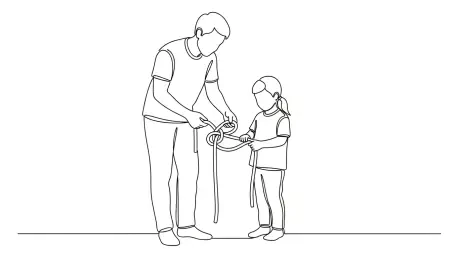

The parental instinct to shield a child from hardship is as primal as it is powerful, often compelling caregivers to intervene at the first sign of a struggle, whether it is a playground disagreement or a perplexing homework assignment. This deep-seated urge to protect and provide is a cornerstone of nurturing. However, a growing body of psychological research suggests that when this protective impulse becomes a pattern of constant intervention, it may inadvertently weaken the very skills children need to navigate life’s inevitable challenges. What feels like loving support can, over time, become a barrier to developing confidence, independence, and true resilience. This exploration delves into the subtle ways well-intentioned parenting can cross the line into overparenting, and offers a roadmap for stepping back to allow children the space they need to grow.
The Parent Trap Is Your Instinct to Help Actually Hurting
At its core, the desire to help a child is an expression of love. Seeing a child frustrated, sad, or confused triggers a powerful response to make things better. The immediate relief that comes from solving their problem is rewarding for both the parent and the child. This dynamic, however, can create a dependency cycle where children learn to look outward for solutions rather than inward. When a parent consistently smooths the path, the child is deprived of the critical experience of grappling with a problem, brainstorming solutions, and experiencing the satisfaction of overcoming a challenge independently.
This pattern of preemptive problem-solving can manifest in numerous ways, from doing a difficult science project for a child to ensure a good grade, to calling another parent to resolve a minor peer conflict. While these actions remove immediate discomfort, they also send an implicit message: “You are not capable of handling this on your own.” Over time, this message can be internalized, leading to a diminished sense of self-efficacy. The child may become hesitant to take risks or try new things for fear of failure, because they have not developed the confidence that comes from successfully navigating past mistakes.
Understanding the Resilience Gap Why This Matters Now More Than Ever
The phenomenon of “overparenting” is formally defined by a combination of two behaviors: overinvolvement and overprotection. This approach, while rooted in care, repeatedly signals to children that the world is inherently unsafe and that they lack the internal resources to manage its complexities without constant adult support. The result is a widening “resilience gap,” where children are chronologically maturing but emotionally and practically unequipped to handle the normal stressors of life. This can have significant real-world consequences, chipping away at their confidence and fostering a deep-seated dependence on external validation and assistance.
The long-term effects of this parenting style are increasingly visible as these children enter adolescence and young adulthood. Mental health professionals report a rise in anxiety and a lower tolerance for frustration among young people who have not been given opportunities to develop coping skills. When accustomed to having obstacles removed, the first encounter with a significant, unmovable challenge—such as a difficult college course, a job rejection, or a complex social situation—can feel catastrophic. They have not built the psychological muscle required to persist through failure, adapt to changing circumstances, or regulate their own emotional responses to disappointment.
Five Telltale Signs of Overparenting
One of the most common signs of overparenting is the tendency to be a preemptive problem-solver. This parent instinctively provides solutions before the child has had a meaningful opportunity to try, fail, or succeed on their own. This might look like immediately intervening with a teacher about a challenging assignment to avoid potential stress for the student or stepping in to mediate a minor squabble between friends without allowing them to work it out. The parent’s intention is to minimize struggle, but in doing so, they remove invaluable learning opportunities that are essential for building independent thought and problem-solving abilities.
Another clear indicator is acting as an emotional shield, treating negative feelings like anxiety, sadness, or frustration as inherently harmful states that must be fixed immediately. Instead of allowing a child to process their emotions, the parent might rush to distract them with a fun activity or offer superficial reassurances. Saying “Don’t be sad!” or “There’s nothing to be worried about” invalidates the child’s experience and teaches them that uncomfortable feelings are intolerable. This prevents them from learning to sit with discomfort, understand its source, and develop healthy emotional regulation skills.
This behavior is often linked to an underlying expectation of fragility. The parent adjusts expectations based on what they fear the child cannot handle, rather than what the child is capable of learning. This can manifest as excusing a child from chores because they seem tired or allowing them to skip sports practice after a minor setback. This constant lowering of the bar, meant to protect, inadvertently communicates a lack of faith in the child’s capacity to handle stress and responsibility. Over time, children may internalize this view, seeing themselves as incapable and fragile.
Furthermore, overparenting often involves an intense focus on results over the process. The priority becomes preventing mistakes and guaranteeing a successful outcome, rather than appreciating the lessons learned from navigating setbacks. This can be seen when a parent micromanages a school project to ensure it is “perfect,” effectively taking ownership away from the child. It also appears when a parent argues with a coach over a disappointing decision, teaching the child that adverse outcomes are unacceptable and should be contested by an authority figure, rather than accepted as part of the experience.
Finally, many of these behaviors are driven by the parent’s own anxiety. A parent’s fears about their child’s failure, social standing, or future success can become the primary motivator for their decisions, superseding the child’s actual developmental needs. Hovering over homework not because the child needs help, but because the parent is anxious about their academic performance, is a classic example. The child can easily interpret this hyper-vigilance as a vote of no confidence, planting seeds of self-doubt and amplifying their own anxiety about performance.
Insights from a Harvard Psychologist on Nurturing True Resilience
Expert perspectives confirm that this pattern can be counterproductive. Dr. Meredith Elkins, a clinical psychologist at Harvard Medical School specializing in childhood anxiety, notes that overparenting often stems from a place of profound love and a desire to protect. However, her clinical work reveals a paradoxical outcome: shielding children from every challenge can heighten the very anxiety that parents hope to prevent. When children are not exposed to manageable stressors, they do not develop the coping mechanisms needed for larger ones, leaving them more vulnerable in the long run.
The core of Dr. Elkins’s findings is that resilience is not an innate trait but a skill that is built through experience. It requires a delicate balance from caregivers—providing a secure base from which a child can explore, while also allowing them the freedom to encounter and overcome obstacles independently. As Dr. Elkins states, “Resilience develops when kids feel secure enough to try and free enough to learn on their own.” This highlights the need for a shift in the parental role from a constant manager and protector to that of a supportive coach who trusts in the child’s ability to learn and adapt.
A Practical Guide Shifting from Rescuer to Coach
For the parent who acts as a preemptive problem-solver, the most effective strategy is to pause and prompt. Instead of immediately offering a solution when a child expresses frustration, the caregiver can take a breath and ask an empowering question like, “That sounds tough. What do you think you could try?” This simple shift transfers the responsibility for critical thinking back to the child, validates their capacity to generate ideas, and reinforces the idea that their input is the most important first step in solving their own problems.
In response to the instinct to be an emotional shield, the focus should turn toward normalizing and validating feelings. Rather than rushing to eliminate sadness or frustration, a parent can name the emotion and express confidence in the child’s ability to manage it. A statement such as, “It makes sense that you feel frustrated about that, and I know you can handle these tough feelings,” teaches emotional literacy and self-efficacy. It communicates that emotions are not emergencies and that the child possesses the inner strength to move through them.
To counter the expectation of fragility, parents must consciously challenge their own assumptions. Before stepping in to lower a demand or remove a challenge, it is useful to ask, “Is this situation truly unsafe, or is it just uncomfortable?” Distinguishing between genuine risk and productive struggle is key. The goal is to offer support that encourages growth, not avoidance. This might mean encouraging a child to finish a challenging practice or complete a chore even when they express reluctance, thereby showing them they are more capable than they believe.
For the parent who is intensely focused on results, the antidote is to embrace imperfection and allow natural consequences to serve as teachers. This means resisting the urge to drive a forgotten lunch to school or to argue with a teacher over a fair but disappointing grade. By allowing these minor failures to occur, parents provide an invaluable opportunity for children to learn responsibility, organization, and accountability. The supportive role becomes helping them think through how to handle the situation next time, rather than erasing the mistake.
Finally, for the parent whose actions are driven by their own anxiety, the work begins with self-reflection. Before intervening, it is critical to pause and ask, “Is my impulse to act about my child’s safety, or is it about my own discomfort with seeing them struggle?” Recognizing that the urge to fix things may be rooted in personal anxiety is the first step. By modeling how to tolerate discomfort without immediately reacting, a parent teaches a powerful lesson in emotional regulation and resilience, showing that it is possible to sit with uncertainty and trust the process.
The path away from overparenting was not about neglect but about a recalibration of support. It involved a conscious decision to trade the short-term comfort of intervention for the long-term benefit of a child’s competence and confidence. Parents who made this shift found that their role transformed from a constant problem-solver to a trusted advisor. They learned that true security for a child did not come from an environment free of challenges, but from the unwavering belief that they had the strength and skill to face whatever came their way. The ultimate achievement was not raising children who never fell, but nurturing resilient individuals who knew, without a doubt, how to get back up.