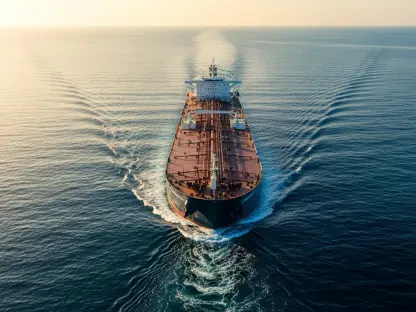

The global maritime industry, a vital artery of world trade, is under immense pressure to decarbonize its operations, yet a significant challenge has been the lack of viable, zero-carbon fuel alternatives that can be safely and legally adopted on a global scale. While ammonia has long been heralded as a promising candidate due to its carbon-free composition, its widespread adoption has been stalled by a formidable regulatory roadblock within international maritime law. For years, the very codes designed to ensure safety at sea paradoxically prevented gas carriers from using their ammonia cargo as fuel, effectively locking away a potential solution in plain sight. This critical impasse created a climate of uncertainty, discouraging investment in ammonia-fueled vessel technology and hindering tangible progress toward a greener future. The industry needed more than just a theoretical solution; it required a clear, internationally recognized pathway that would balance the immense potential of ammonia with the non-negotiable demands of maritime safety and operational viability.
A New Blueprint for Maritime Regulation
The Power of Tripartite Collaboration
The successful dismantling of this regulatory barrier was not the result of a single entity’s efforts but a testament to a powerful tripartite collaboration that brought together distinct yet complementary expertise. At the helm of the initiative was the Belgian Federal Public Service (FPS) for Mobility and Transport, which leveraged its deep understanding of international regulatory processes to champion the cause at the International Maritime Organization (IMO) and build the necessary consensus. Acting as the technical cornerstone was Lloyd’s Register (LR), which provided the indispensable safety assurance and in-depth technical knowledge required to manage ammonia’s inherent risks. Completing the alliance was the shipping company EXMAR, which offered the crucial perspective of a practical operator with a clear business case, grounding the discussions in real-world needs. This synergistic model proved key, as the Belgian FPS navigated the intricate diplomatic landscape while LR conducted rigorous risk assessments and EXMAR’s operational insights ensured the proposed guidelines would be commercially viable and not impose unworkable constraints.
Amending the International Safety Code
The central achievement of this collaboration was the development of new “Interim Guidelines” that formally amend the International Code for the Construction and Equipment of Ships Carrying Liquefied Gases in Bulk (IGC Code). A key restriction within this code had long prevented the consumption of toxic cargo, including ammonia, as fuel, becoming a major obstacle to decarbonization. The new guidelines create a standardized exception, providing a clear legal framework for designing vessels to use their ammonia cargo for propulsion. The path to establishing these guidelines was a meticulous two-year journey that began with the partners submitting an initial draft to an IMO Correspondence Group. This kicked off a period of intensive development with other Member States, ensuring the final text was both technically sound and politically acceptable. The culmination of this effort occurred during the IMO’s CCC 11 sub-committee meeting, with formal approval and adoption anticipated at the Maritime Safety Committee (MSC 111) meeting in May 2026.
Charting a Course for Decarbonization
Unlocking a Viable Zero-Carbon Pathway
This regulatory breakthrough signals a significant acceleration in the maritime industry’s progress toward decarbonization. By creating an officially sanctioned pathway, the new guidelines provide the certainty that shipowners, financiers, and shipyards need to de-risk investments in ammonia-fueled vessels. This clarity is expected to spur a new wave of innovation, transforming ammonia from a promising but restricted alternative into a commercially viable and legally permissible zero-carbon fuel. The most significant impact is the substantial environmental benefit; using ammonia cargo as fuel allows for a dramatic cut in a vessel’s carbon footprint, with estimates suggesting a potential reduction in direct CO₂ emissions of up to 90%. This provides a powerful business case for operators, aligning environmental responsibility with commercial viability. For gas carriers, the ability to use the product they are transporting also simplifies fuel logistics, creating a potent incentive for widespread adoption across the fleet.
A Model for Future Energy Transitions
The success of this initiative serves as a powerful blueprint for tackling future regulatory challenges in the maritime industry’s energy transition. The collaborative model, integrating regulatory, technical, and operational expertise, proved exceptionally effective, demonstrating that stakeholders can proactively engage with the IMO to co-create necessary frameworks. This approach can be replicated for other alternative fuels like hydrogen and methanol. A critical lesson from this process is the delicate balance the guidelines strike between enabling innovation and upholding the highest safety standards. They meticulously address ammonia’s risks through stringent requirements for design, training, and safety systems, but do so in a performance-based manner that provides operational flexibility. This nuanced approach, which fosters innovation while ensuring safety remains paramount, will be essential as the industry develops similar frameworks for other nascent fuel technologies in the coming years.
The Voyage Ahead
The establishment of these interim guidelines marked a pivotal moment for the maritime sector’s decarbonization journey. This collaborative achievement effectively dismantled a long-standing regulatory barrier, providing the global shipping industry with a clear, internationally recognized, and safe pathway for adopting ammonia as a viable marine fuel for gas carriers. The process demonstrated the immense value of a proactive partnership between regulatory bodies, technical classification societies, and commercial operators in navigating the intricate web of complex international standards. By forging a consensus-driven solution that balanced stringent safety requirements with necessary operational flexibility, the initiative did more than just unlock the potential of a specific zero-carbon fuel. It created a successful and replicable blueprint for future regulatory advancements, showing how the industry can proactively shape its own transition. This breakthrough represented a critical step forward, transforming theoretical possibility into practical reality and setting a new, more confident course for a sustainable future in global shipping.